Put Down the Phone: How Crochet Became the Wellness Habit Nobody Saw Coming
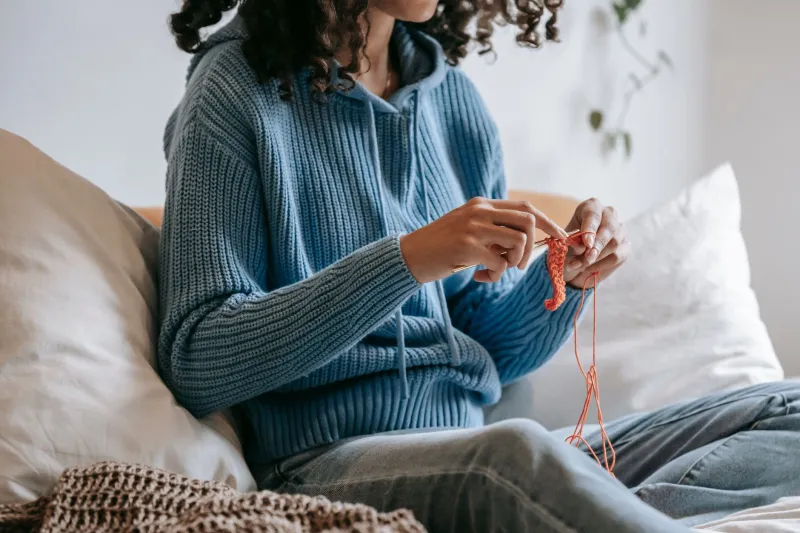
Your Brain on Yarn
Here's something wild: the same restless hands that reflexively reach for your phone at 11pm might be the exact hands that need a crochet hook instead.
It sounds almost too simple. But therapists, neuroscientists, and a whole lot of makers across the US are arriving at the same conclusion — the repetitive, rhythmic motion of crochet does something genuinely good for your nervous system. Not in a vague, feel-good way. In a measurable, "your cortisol levels are actually dropping" kind of way.
And honestly? The timing makes total sense. We're collectively exhausted from screens, notifications, and the pressure to optimize every waking minute. Crochet asks nothing of you except to count your stitches and keep going. That's kind of revolutionary right now.
What the Research Actually Says
Neuroscientists who study repetitive movement have found that activities like knitting and crochet activate the parasympathetic nervous system — that's the "rest and digest" mode your body desperately needs more of. The bilateral hand movement (both hands working in a coordinated rhythm) has even drawn comparisons to EMDR therapy, a technique used by licensed therapists to process stress and trauma.
Dr. Herbert Benson's research on the "relaxation response" at Harvard laid groundwork decades ago for understanding how repetitive, focused activity lowers heart rate, reduces muscle tension, and quiets the mental chatter that drives anxiety. Crochet checks every box.
Beyond the nervous system stuff, there's a dopamine angle too. Every completed row, every finished granny square, every time you hold up a finished piece and think I made that — your brain gets a little reward hit. It's the same mechanism behind why people find satisfaction in cooking a meal from scratch or finishing a puzzle. Tangible progress feels good. And in a world where so much of our work lives in the cloud and disappears the moment we close a tab, making something physical with your hands is almost radical.
Real People, Real Reasons
Across crochet communities on Reddit, in Facebook groups, and at local yarn shops from Portland to Nashville, you'll hear the same kinds of stories.
Makers who started crocheting during the pandemic as something to do with their hands — and realized they'd slept better that week than they had in months. People managing ADHD who found that the focused repetition gave their brain just enough stimulation to stay present without spinning out. Folks in recovery who needed something constructive to reach for when cravings hit.
One thing that comes up again and again: crochet replaced the phone. Not because anyone set a hard rule about screen time, but because once the hook was in hand, the pull of the feed just... faded. There's something about the tactile engagement — the texture of the yarn, the click of the hook, the visual feedback of watching a fabric grow row by row — that satisfies the restless need for input in a way that scrolling never quite does.
And unlike doomscrolling, you have something to show for it at the end.
The Anti-Productivity Craft
Here's where it gets a little countercultural.
For a long time, even in the maker community, there was pressure to monetize your hobby. Turn your passion into a side hustle. Sell on Etsy. Build a brand. And look, there's nothing wrong with any of that — we've talked about the business side of crochet plenty around here. But a real shift is happening where more makers are actively choosing to keep their craft just for themselves.
No orders. No commissions. No content calendar. Just yarn and a hook and an evening that belongs entirely to them.
Therapists who work with high-achieving, chronically stressed clients have started recommending crafts specifically because they resist productivity framing. You can't rush a crochet project. You can't batch-produce your way to a finished blanket in an afternoon. The slowness is the point. The process is the point. That's genuinely hard for a lot of us to sit with at first — and then, gradually, it becomes the thing we look forward to most.
Starting Small (And Why That's Perfect)
If you're brand new to crochet and the wellness angle is what's drawing you in, good news: you don't need to dive into a complex pattern to get the benefits.
Simple, repetitive projects are actually ideal for the mindfulness effect. A long single crochet scarf. A pile of small squares. Even just practicing your foundation chain over and over while you watch TV. The goal isn't to produce something impressive — it's to give your hands and your brain something gentle and absorbing to do together.
A few things that help beginners lean into the calming side of crochet:
- Choose a yarn that feels good in your hands. Soft, smooth yarns reduce friction and frustration, especially early on. You want the physical experience to be pleasant.
- Pick a neutral or soothing color palette to start. This sounds small, but working with colors you find calming can actually deepen the relaxation effect.
- Give yourself permission to rip it out. In crochet, mistakes are easy to undo — and that's part of what makes it low-stakes. Nothing is permanent. You can always start the row over.
- Ditch the timer. Seriously. Don't set a goal for how much you'll finish in a session. Just pick it up and put it down when you feel like it.
The Bigger Picture
There's something meaningful about the moment we're in right now. A generation raised on screens is rediscovering the satisfaction of making things by hand. People who've spent years optimizing their productivity are learning to value slowness. And a craft that was once dismissed as your grandma's hobby is showing up in therapy offices, wellness blogs, and college dorm rooms across the country.
Crochet didn't change. We did. We got tired enough, overstimulated enough, disconnected enough from our own hands that the simple act of looping yarn over a hook started to feel like medicine.
Maybe that's exactly what it is.
If you've been thinking about picking up crochet and just haven't gotten started, consider this your nudge. Not because you need a new hobby or a handmade wardrobe or anything else. Just because your hands might be craving something to do that isn't a screen — and there's a whole craft built around giving them exactly that.