Wear What You Made: Matching Yarn Colors to Your Skin Tone Like a Pro
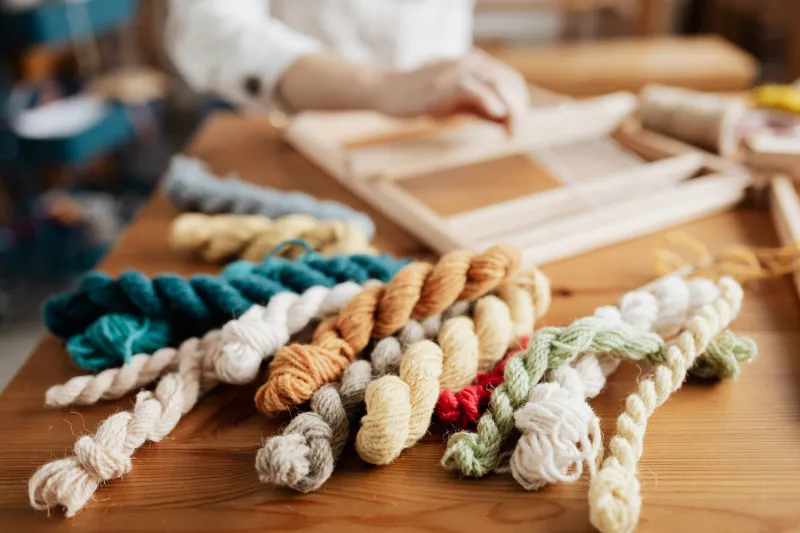
The Moment Every Crafter Knows Too Well
You spent weeks on it. The tension was perfect, the stitch pattern came out cleaner than anything you've made before, and the yarn felt incredible in your hands. Then you try it on, look in the mirror, and something just doesn't click.
It's not your skills. It's probably the color.
This happens to so many makers — and honestly, it makes sense. When we shop for yarn, we're usually reacting to what looks beautiful in the skein, under fluorescent craft store lighting, against a white shelf backdrop. That's a completely different environment than how a finished piece will actually look draped across your shoulders or crocheted into a hat framing your face.
The good news? A few basics from the world of color theory can completely change how you approach your yarn stash — and help you make pieces you'll actually reach for every single day.
Start With Your Undertone, Not Just Your Skin Color
Here's the thing about color and skin: it's less about how light or dark your complexion is, and more about the undertone running beneath the surface. Most people fall into one of three camps — warm, cool, or neutral — and once you know yours, yarn shopping gets a whole lot easier.
Warm undertones tend to have a golden, peachy, or yellow cast to the skin. If your veins look greenish on the inside of your wrist, and you tend to tan rather than burn, you're probably warm-toned.
Cool undertones lean more pink, red, or bluish. Blue or purple-tinted veins? You likely run cool. Fair-skinned folks who burn easily often fall here, but so do plenty of deeper complexions.
Neutral undertones are a mix of both — your veins might look blue-green, and both warm and cool colors tend to work reasonably well on you. Lucky you, honestly.
Not sure where you land? Try holding a piece of bright white paper next to your face, then a piece of off-white or cream. If the bright white makes you look more vibrant, you're probably cool-toned. If the cream feels softer and more flattering, you're likely warm.
Colors That Love Warm Undertones
If you've got warm undertones, your yarn palette is basically a walk through an autumn farmers market. Think rich, earthy tones: terracotta, mustard yellow, olive green, warm camel, rust, and deep burnt orange. These shades echo the warmth already in your complexion and create that effortless, cohesive look.
Neutrals like camel and warm taupe are incredibly wearable for warm-toned makers — a simple crochet cardigan in a honey-gold yarn can feel like it was literally made for you (because it was).
On the flip side, very icy or blue-based colors — think cool lavender, icy pink, or stark white — can sometimes wash out warm skin. That doesn't mean they're off-limits, but they might work better as accent colors in a project rather than the main event.
Colors That Flatter Cool Undertones
Cool-toned skin tends to come alive next to jewel tones and colors with blue or pink bases. Navy, emerald, deep plum, royal blue, magenta, and soft rose are all stunning choices. There's a reason a classic navy blue crochet sweater feels so timeless — it works beautifully across a wide range of cool complexions.
Softer pastels can also be lovely for cool-toned makers, especially icy lavender, powder blue, and mint. These shades have enough blue in them to harmonize with your undertone without competing.
Earthy, yellow-based colors like mustard or warm brown can sometimes look a little muddy against cool skin. Again, not a hard rule — but worth being mindful of when you're picking a main yarn color for a wearable project.
Neutral Undertones: The Most Flexible Palette
If you're in the neutral camp, genuinely most colors will work on you with the right shade depth and saturation. Your bigger consideration might be contrast — the difference between your hair, eyes, and skin tone.
High-contrast coloring (think dark hair and light skin, or vice versa) tends to look amazing in bold, saturated colors or strong color combinations. Low-contrast coloring — where your features are closer in depth — can feel more balanced in tonal, monochromatic palettes or soft medium shades.
Thinking Beyond Undertone: Depth and Saturation Matter Too
Undertone is a great starting point, but it's not the whole story. The depth of a color (how light or dark it is) and its saturation (how vivid versus muted) also play a big role in how it reads against your skin.
Deeper skin tones can carry rich, saturated colors that might overwhelm a lighter complexion — think deep jewel tones, vibrant fuchsia, or bold cobalt. At the same time, very deep neutrals like charcoal or navy can sometimes get lost against darker skin, while brighter or contrasting colors create beautiful definition.
Fair skin can be gorgeous in both delicate pastels and bold statement colors — the key is usually finding enough contrast to keep the look intentional rather than washed out.
Medium skin tones have a lot of flexibility, but tend to look especially radiant in warm, medium-depth shades like dusty rose, sage green, warm tan, and soft coral.
A Practical Trick Before You Buy
Next time you're at the craft store (or scrolling through an online shop like Lion Brand, Paintbox, or WeCrochet), bring a photo of yourself on your phone — or better yet, drape the yarn skein close to your face in natural light before you commit. Natural light is everything here. Craft store lighting is notoriously deceptive.
If you're shopping online, consider ordering small amounts of a few colorways before committing to a full project quantity. Most yarn brands offer mini skeins or samples, and that small investment can save you from a full project that ends up unworn.
Building a Wearable Yarn Wardrobe
Once you know your undertone and have a sense of the shades that work for you, you can start building what I like to think of as a personal yarn palette — a go-to set of colors that you know will always translate into pieces you'll actually wear.
Keep a note on your phone (or a little card in your craft bag) with your confirmed flattering shades. When you spot a beautiful yarn on sale or see a colorway you love, you'll have a reference to check against before impulse-buying three skeins of something that might not serve your wardrobe.
The goal isn't to limit your creativity — it's to make sure the time and love you pour into every stitch actually pays off in a piece you're excited to wear out into the world.
Because the best crochet project? It's the one that makes you feel like you every single time you put it on.