Why Your Crochet Looks Uneven (And What Your Tension Is Actually Trying to Tell You)
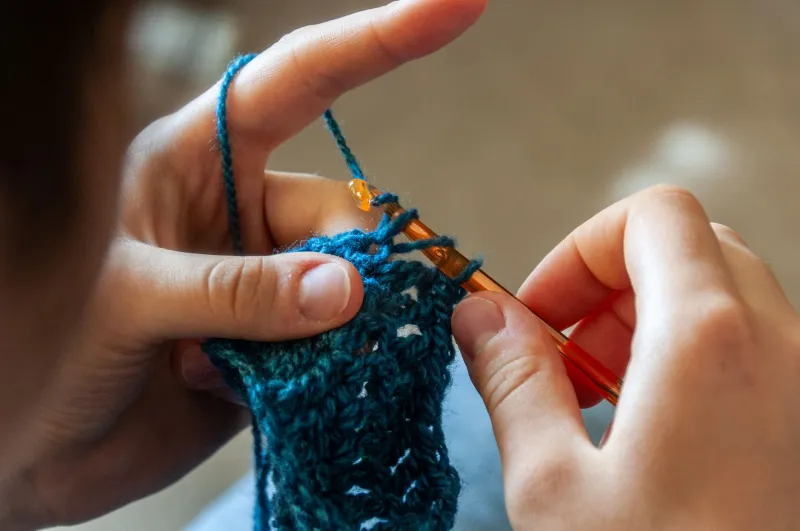
You followed the pattern. You used the right hook size. You even did the gauge swatch (we see you). And yet — your finished piece has that thing happening. The texture looks uneven. Some rows are tighter than others. The fabric puckers in places it shouldn't, or it looks weirdly stiff, or the stitch definition is so muddy you can barely see the pattern.
This is a tension problem. But it's probably not the kind of tension problem you think it is.
Most crochet resources treat tension like a single dial — you're either too tight or too loose, and the fix is to switch hook sizes. That's the beginning of the story, not the whole thing. Real tension is dynamic. It changes with your mood, your fatigue level, the fiber you're working with, and even the time of day. Understanding why it shifts is what separates a maker whose work looks handmade (in the rough sense) from one whose work looks handmade (in the impressive sense).
Tension Is Not Just About Tightness
When most people say "tension," they mean how hard they're gripping the yarn — how tightly the stitches sit on the hook. And yes, that matters. But tension also includes:
- Yarn feed consistency: How evenly you're releasing yarn through your non-dominant hand as you stitch
- Hook angle: The angle at which you insert the hook affects the shape of each stitch
- Pull-through depth: How far you draw the loop through changes the height and width of your stitch
- Working speed: Faster crocheters often develop looser tension; slower, more deliberate makers tend to go tighter
All of these variables interact. A row you crocheted while watching a stressful TV show might be noticeably tighter than the row you crocheted on a lazy Sunday morning. That's not a character flaw — it's just how hands work.
What Lumpy or Puckered Fabric Is Actually Telling You
Different texture problems point to different causes. Here's a quick diagnostic:
Uneven rows (some tight, some loose): This is almost always about consistency in your yarn feed. If your tension on the yarn varies — sometimes you're holding it more loosely, sometimes you're gripping harder — your stitch size will vary too. Practice feeding yarn through the same fingers in the same way every time.
Puckering or curling edges: Usually a sign that your edge stitches are tighter than your center stitches. This is incredibly common and often gets worse with experience (counterintuitively). As you get faster, you may start rushing through the ends of rows, pulling those stitches tighter without realizing it. Slow down at the turns.
Muddy stitch definition: Often a fiber issue, not a tension issue. Fuzzy or hairy yarns (mohair, alpaca, some wool blends) naturally obscure stitch definition. If you want crisp, visible texture, reach for smooth, plied yarns — cotton, linen, and tightly spun wool are your best friends here.
Stiff, dense fabric: You're crocheting too tightly for the yarn. Go up a hook size, or consciously practice making looser stitches by pulling each loop a little further before completing the stitch.
Floppy, shapeless fabric: Too loose for the yarn. Go down a hook size, or try holding the yarn with slightly more resistance in your non-dominant hand.
The Hook Size Isn't Always the Answer
Here's something worth sitting with: hook size is a blunt instrument. It adjusts average tension, but it doesn't address the root cause of inconsistent tension.
If your natural tension varies a lot from stitch to stitch, going up a hook size will just give you larger uneven stitches. The real work is in developing consistency — and that comes from slowing down and paying attention to what your hands are actually doing.
Try this experiment: crochet a row at your normal pace, then crochet the next row as slowly as you possibly can, focusing on making every stitch the same height. Hold them up and compare. For most people, the slow row looks noticeably more even. That's not because slow is better — it's because conscious attention produces consistency.
Fiber Content Changes Everything
Different yarns behave completely differently under the same tension, and this trips up even experienced makers when they switch materials.
- Cotton and linen have almost no stretch. They're unforgiving of inconsistent tension because there's no elasticity to smooth things out. But they also show stitch definition beautifully when your tension is even.
- Wool and wool blends have natural memory and elasticity, which helps hide minor inconsistencies. They're generally more forgiving for beginners.
- Acrylic varies wildly depending on quality. Budget acrylics can be stiff and plasticky; premium acrylics can be surprisingly soft and even. Know your brand.
- Bamboo and viscose are slippery, which means they can slide off the hook more easily and create looser-than-intended stitches. You may need to consciously tighten your grip on the yarn.
When you switch fiber types, expect an adjustment period. Your hands are calibrated to the yarn you've been using. Give yourself a few rows to recalibrate before you judge the results.
A Simple Tension-Building Practice
If you want to actively improve tension consistency, here's a low-stakes exercise that works surprisingly well:
Crochet a 6" × 6" swatch in single crochet. Don't count rows or stress about gauge. Just focus on making each stitch feel the same as the last one. When you're done, hold it up to the light and look at it honestly. Are the rows even? Are the edges straight? Are the stitches uniform?
Do this once a week with a different yarn. Over time, your hands will develop muscle memory for what "even" feels like — and you'll start to feel tension inconsistencies before you can see them.
Professional Texture Starts With Honest Observation
The makers whose crochet always looks polished aren't necessarily more talented — they're more observant. They notice when their tension starts to drift and they correct it before it becomes a whole row of uneven stitches.
You can develop that same awareness. It takes time, but it's one of those skills that pays off on literally every project you make from here on out.
Your hands are capable of beautiful, consistent work. Sometimes they just need a little coaching.