From Niche Craft to Runway Royalty: How Crochet Became the Coolest Thing in Your Closet
Nobody Saw This Coming — And Yet Here We Are
Not too long ago, pulling out a crochet hook in public might have earned you a few raised eyebrows. Maybe a polite smile from someone who assumed you were making pot holders for a church bake sale. Fast forward to today, and that same hook is connecting you to one of the most exciting shifts in American fashion culture in decades.
Crochet isn't just back. It never really left — it just waited for the rest of us to catch up.
What's happening right now isn't a fleeting trend driven by a single viral TikTok or a celebrity photo op (though those haven't hurt). It's a full-on cultural recalibration. People are rethinking what they wear, where it comes from, who made it, and what it says about them. And somehow, stitch by stitch, crochet ended up right at the center of all of it.
The Runway Said So First
Let's give credit where it's due. High fashion started whispering about crochet years before most of us noticed. Designers like Valentino, Missoni, and Bottega Veneta began working crochet-inspired textures and handcrafted details into their collections — not as novelty, but as intentional luxury. The message was clear: something made carefully, with skill and time, is worth more than something mass-produced at lightning speed.
Then came the celebrities. Rihanna stepped out in a bold crochet set that broke the internet. Lizzo wore handmade-looking knitwear on the red carpet and made it look like a million bucks (because, well, it kind of was). Harry Styles built an entire aesthetic around cozy, crafted, unapologetically tactile fashion — and suddenly, the idea of wearing something that looked made wasn't just acceptable. It was aspirational.
When fashion's biggest names start treating a craft like an art form, people pay attention.
What Changed? The Culture Did.
Here's the thing about trends: they don't emerge in a vacuum. The crochet renaissance makes complete sense when you zoom out and look at what's been happening in American culture over the past several years.
The pandemic sent millions of people indoors with too much time and a desperate need to create something — anything — with their hands. Etsy sales for handmade goods skyrocketed. Craft supply stores reported shortages. People who had never touched a hook in their lives suddenly found themselves deep in YouTube tutorials at midnight, trying to figure out a half double crochet.
But it wasn't just boredom. It was a genuine desire to reconnect with something slower, more intentional, more real. In a world of one-click shopping and fast fashion hauls, the idea of making something yourself — something that took hours and patience and actual skill — started to feel genuinely radical.
Crochet became a quiet act of resistance against disposable culture.
The 'Grandma's Craft' Label Doesn't Fit Anymore
Let's talk about that reputation for a second, because it's worth unpacking. For a long time, crochet carried a very specific image: doilies, afghans, Christmas ornaments, and maybe a slightly itchy sweater from 1987. Sweet? Sure. Stylish? Not exactly the first word that came to mind.
But that image was always more about cultural bias than reality. The craft itself — the actual technique, the versatility, the sheer range of things you can create — was never the problem. What changed is that a new generation of makers refused to accept the limitations that stereotype placed on the art form.
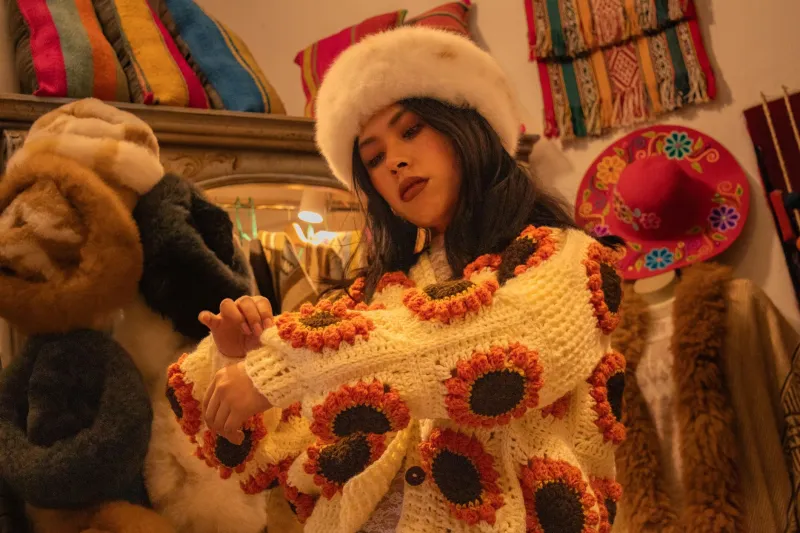
Creators on Instagram and TikTok started showing off crochet bucket hats, mesh tops, color-blocked cardigans, and beachy cover-ups that looked like they belonged in a boutique window in Venice Beach or Williamsburg. Young Black and Latina makers brought fresh cultural aesthetics to their work, expanding what crochet could look and feel like. Queer artists used fiber art to explore identity and self-expression in ways that were deeply personal and visually striking.
The craft didn't change. The conversation around it did.
Handmade as a Personal Statement
One of the most interesting things about this moment is what it says about how Americans are thinking about personal style. For a while, fashion was about logos and labels — the brand you wore told people who you were (or who you wanted to be). But there's a growing movement that's pushing back on that, and crochet fits right into it.
When you wear something you made yourself — or something made by an independent maker — you're communicating something different. You're saying: I value craft. I care about where my clothes come from. I'm not interested in looking like everyone else. That's a powerful statement, and it resonates especially with younger consumers who are deeply skeptical of corporate fashion and its environmental impact.
Handmade pieces are inherently one-of-a-kind. Even if two people follow the same pattern, the slight variations in tension, the yarn choice, the color substitutions — they all add up to something uniquely yours. In a world where everyone can buy the same fast-fashion dress in the same three colorways, that kind of individuality has real value.
What This Means for the Future of Handmade Fashion
So where does this all go from here? Honestly? The signs point to crochet becoming a permanent fixture in American fashion culture rather than a trend that fades with the next season.
The infrastructure is there. Independent makers have built real businesses on platforms like Etsy, Ravelry, and their own websites. Pattern designers are creating content that ranges from beginner-friendly to genuinely complex, bringing new crafters into the fold every day. Yarn companies are responding with better colorways, more sustainable fiber options, and products specifically designed for fashion-forward projects.
And the cultural conversation keeps expanding. Sustainability advocates point to handmade garments as an antidote to fast fashion's waste problem. Mental health professionals highlight the meditative, anxiety-reducing benefits of repetitive crafts. Fashion historians are reexamining crochet's roots and giving long-overdue recognition to the generations of women — many of them women of color — whose skill and creativity built this tradition.
Crochet isn't just having a moment. It's building a movement.
Your Hook, Your Story
Maybe you've been crocheting for years and you're watching all of this with a knowing smile, thinking welcome to the party. Or maybe you're newer to the craft, drawn in by a gorgeous handmade piece you spotted on someone's Instagram and suddenly felt the pull to try it yourself.
Either way, you're part of something that's bigger than any single trend cycle. Every stitch you make is a small act of creativity, sustainability, and self-expression in a world that could use a lot more of all three.
So pull out that hook. Pick a yarn that excites you. And make something beautiful — because right now, there's never been a better time to wear what you made.