Your Yarn Stash Is Out of Control — Here's How to Actually Fix That
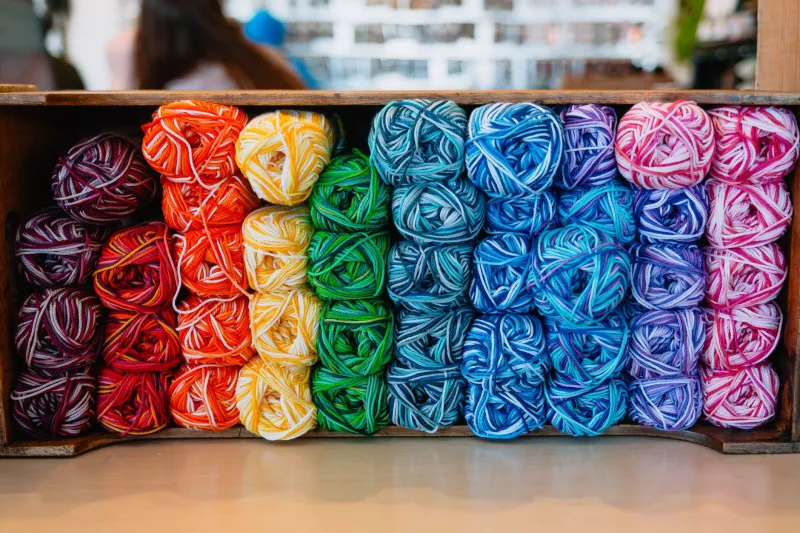
The Yarn Pile Is Real, and So Is the Guilt
Let's be honest for a second. Somewhere in your home — maybe a spare bedroom closet, maybe three plastic bins under the bed, maybe an entire corner of the living room your family has quietly accepted — there is yarn. A lot of yarn. Yarn you bought on sale at Joann's. Yarn from a craft fair two states away. Yarn that came in a mystery box from an Etsy seller you don't even remember.
And somewhere underneath all of it, there's a half-finished granny square project from 2021.
You are not a failure. You are a fiber artist with enthusiasm and a debit card, which is a very common combination. But at some point, the stash stops being inspiring and starts feeling like homework. So let's talk about what to actually do about it — storage, repurposing, and breaking the cycle of buying yarn you genuinely do not need.
Step One: Take Stock Before You Touch Another Skein
Before you reorganize anything, you need to know what you're working with. This sounds obvious, but most crafters skip it and go straight to buying cute storage bins — which, ironically, is just more buying.
Pull everything out. Yes, everything. Lay it on the floor, the bed, wherever you have space. Group by weight first (fingering, DK, worsted, bulky), then by fiber content if you can manage it. Wool and acrylic behave very differently in projects, and mixing them up in storage is how you end up grabbing the wrong thing mid-project at 11pm.
As you sort, ask yourself three questions about each skein or ball:
- Do I know what I want to make with this?
- Is there enough of it to actually finish something?
- Do I still like it?
That last one matters more than people admit. Tastes change. The neon orange you were obsessed with in 2019 might not spark anything in you now, and that's okay. Set aside anything that gets a hard no on all three questions — we'll come back to it.
Smart Storage That Doesn't Cost a Fortune
Once you know what you have, storage becomes a lot more intentional. The goal isn't to have the most Pinterest-worthy craft room on the internet. The goal is to actually be able to find your yarn when you sit down to crochet.
A few approaches that work well for real people with real homes:
Clear bins by weight. Simple, cheap, and functional. Dollar Tree and IKEA both carry clear storage containers that let you see exactly what's inside without digging. Label them — worsted, bulky, scraps — and stick to the system.
Open baskets for your active stash. Whatever you're actively working with or planning to use in the next month or two deserves a spot where you can see it every day. Out of sight really does mean out of mind for a lot of crafters, and that's how projects stall.
A dedicated scrap bag or bin. Any yarn under roughly 50 yards goes here automatically. Don't try to store tiny amounts with full skeins — it just creates chaos. Scraps need their own home, and having one makes it way easier to use them up.
What to Actually Do With Leftover Yarn
Here's the part everyone wants: the project ideas. And there are genuinely great ones that don't require you to buy a single extra thing.
Scrap blankets are the classic answer for good reason. Granny squares, striped rows, or even a simple single-crochet rectangle — when you work in sections, you can use up wildly different colors and weights and still end up with something charming and intentional-looking. Lean into the patchwork aesthetic.
Amigurumi and small toys eat through scraps fast. A little stuffed mushroom or a tiny cactus doesn't need more than a few yards of any given color, which makes them perfect for those random bits of yarn that don't fit anywhere else.
Market bags and tote liners work beautifully in mixed fibers. If you've got a bunch of cotton scraps from dishcloth projects, string them together for a lightweight summer bag. It doesn't need to be perfectly matchy — texture and variety are the whole point.
Fringe, tassels, and embellishments are low-effort ways to use up truly tiny amounts. Add fringe to a finished scarf, make a tassel keychain, or embellish a plain hat you already own. These take maybe ten minutes and clear out the weird little bits that collect at the bottom of every craft bag.
For the yarn you sorted out earlier — the stuff you genuinely don't like anymore — consider donating it. Local schools, senior centers, and community theater groups often welcome craft supply donations. Thrift stores like Goodwill sometimes take yarn too. Letting it go isn't failure; it's just making space for what you'll actually use.
The Harder Conversation: Is It a Stash or Is It Hoarding?
This part isn't meant to be harsh. It's meant to be useful.
There's a difference between a working stash — yarn you realistically plan to use, organized in a way that serves your craft — and an accumulation that's started to cause stress, take up space you need, or become a source of guilt rather than joy. A lot of crafters tip from one into the other without noticing, especially if yarn shopping has become more about the dopamine hit of buying than about the actual making.
If you're buying yarn faster than you can possibly use it, if you feel anxious when you try to stop, or if the stash has grown to the point where it's affecting your living space or your budget in ways that bother you — those are worth paying attention to.
One practical strategy: try a yarn diet. Give yourself a set period — a month, three months, whatever feels challenging but doable — where you commit to only working from your existing stash. No new purchases. It sounds dramatic, but most crafters who try it are genuinely surprised by how creative they get when they stop using shopping as a substitute for making.
Another approach is the one-in-one-out rule. Before buying anything new, you have to use up or donate an equivalent amount from what you already have. It slows the accumulation down without requiring total abstinence, which is more sustainable long-term.
The Stash You Actually Want
The dream isn't zero yarn. The dream is a stash that feels like a resource rather than a burden — where you can reach in and find exactly what you need for your next project, where everything has a purpose, and where buying something new is a deliberate choice rather than a reflex.
That's achievable. It just takes a Sunday afternoon, some honest sorting, and maybe a little bit of letting go.
And then — finally — you can get back to the actual making.