Hooks, Hashtags, and Homemade: How Gen Z Fell Hard for Crochet
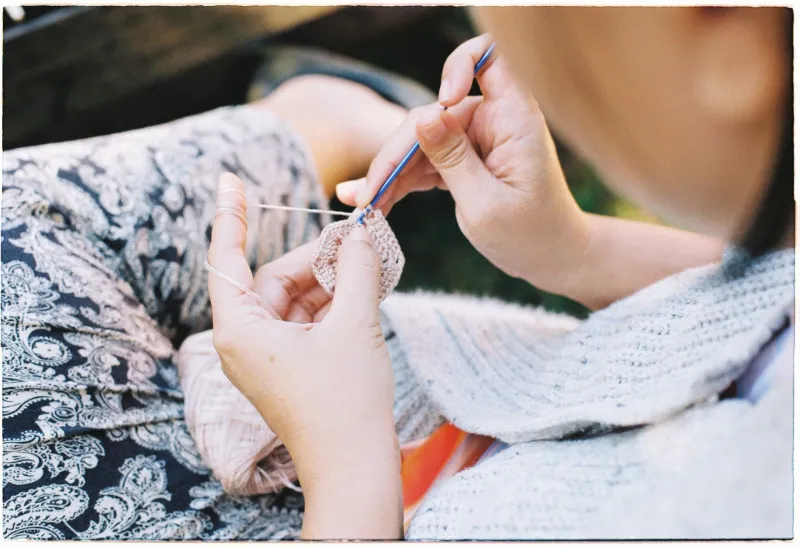
The Generation Nobody Expected to Pick Up a Hook
If you'd told someone in 2010 that crochet would become a cornerstone of youth culture within fifteen years, they probably would've laughed. Crochet was something your grandma did while watching the evening news, right? It was cozy, sure — but cool? That felt like a stretch.
Fast forward to now, and the #crochet hashtag on TikTok has racked up billions of views. Teenagers are filming themselves making granny square cardigans in their bedrooms. College students are selling handmade bucket hats at campus markets. And somewhere along the way, the humble crochet hook became a quiet act of rebellion against a fashion industry that churns out thousands of new styles every single week.
So what actually happened?
Fast Fashion Finally Hit a Wall
For years, the appeal of fast fashion was pretty straightforward — cheap prices, trend-forward styles, and instant gratification. But the cracks started showing. Stories about exploitative labor practices, environmental damage from textile waste, and the sheer disposability of it all began landing differently with younger consumers who grew up hearing about climate change as a present-tense crisis, not a distant threat.
Gen Z didn't just read those headlines — they internalized them. And when you're already skeptical of mass-produced everything, picking up a craft that lets you make something from scratch starts to feel less like a hobby and more like a value statement.
Maya, a 22-year-old in Austin who started crocheting during her freshman year of college, put it simply: "I got tired of buying stuff that fell apart after three washes. I wanted to actually own something — like, really own it. When I make a sweater, I know exactly what went into it."
That sentiment shows up again and again in online crochet communities. It's not just about the finished product. It's about the process of making something intentional in a world that's optimized for speed.
TikTok as the New Stitch-Along
Let's be real — social media deserves a huge chunk of the credit here. TikTok in particular has done something remarkable for fiber arts: it made the learning curve feel approachable and, honestly, kind of fun.
Short-form video is uniquely suited to craft content. A 60-second clip of someone crocheting a flower stitch is mesmerizing in a way that a written pattern just isn't. You can see the hook moving, hear the satisfying pull of the yarn, watch something take shape in real time. It's tactile by proxy, and for a generation that consumes content visually, that matters.
Creators like those behind accounts dedicated to "crochet fits" — full outfits made entirely from handmade pieces — have built massive followings by showing what's actually possible with a hook and some good yarn. These aren't your standard doily tutorials. We're talking color-blocked mesh tops, oversized cardigans with intentional texture, bag collections that could hold their own in any boutique.
And the community aspect? That's been huge too. Comment sections on crochet TikToks are genuinely warm spaces where beginners ask questions and more experienced makers share tips freely. It mirrors the old tradition of crafting circles and stitch-alongs, just scaled up to reach someone in Ohio who didn't have a crafty grandmother to learn from.
Making Something With Your Hands Is a Radical Act Right Now
There's a psychological dimension to this shift that's worth sitting with for a second. We live in a world where so much of what we consume is invisible — streaming content, digital purchases, algorithmic feeds. The physical act of making something tangible is increasingly rare, and that rarity gives it weight.
Research in psychology has long connected handcraft with reduced anxiety and a stronger sense of personal agency. When everything feels uncertain and overwhelming — and if you've been a young adult in the US over the past few years, that feeling is not unfamiliar — sitting down and working row by row on something concrete can feel grounding in a way that doomscrolling decidedly does not.
Jordan, a 24-year-old in Chicago who picked up crochet after a particularly rough stretch post-graduation, described it this way: "It's one of the only things where I feel like I'm actually finishing something. I start it, I work on it, I finish it. That loop feels really good when the rest of life doesn't have clean endings."
That's not a small thing. And it's part of why crochet — unlike some trends — seems to be sticking around rather than fading after a season.
Reclaiming Craft From the "Old Lady" Stereotype
One of the more interesting things happening in this fiber arts revival is the active reclaiming of crochet from the dusty image it carried for decades. Gen Z crafters aren't apologizing for the tradition they're participating in — they're remixing it.
You'll see this in the aesthetics: bright, unexpected color combinations, Y2K-inspired silhouettes, patterns that blend vintage technique with contemporary style. Crochet is showing up at music festivals, in streetwear lookbooks, on red carpets. It's being worn proudly by people who want you to know they made it themselves.
There's also a growing conversation in these communities about honoring the cultural roots of fiber arts — recognizing that crochet and textile traditions have deep histories across Latin American, African, and Indigenous cultures, and that the current trend is built on foundations laid by generations of skilled makers.
What This Means for the Handmade Community
For those of us who've been crocheting for years — or decades — this moment is genuinely exciting. A new wave of makers is coming in curious, enthusiastic, and ready to learn. They're not intimidated by complex patterns the way beginners sometimes used to be, because they've already watched someone on TikTok make it look achievable.
They're also asking good questions about sustainability in the craft itself: where does yarn come from, what fibers are actually eco-friendly, how do you build a stash without contributing to waste? These are conversations that make the whole community stronger.
If you've been crocheting for a while and you've got knowledge to share, now is a genuinely wonderful time to share it — whether that's through your own social media content, a local stitch-along, or even just being the person in the comment section who answers the newbie's question kindly.
Because here's the thing: every maker you see now who's confident and skilled started out holding a hook for the first time, unsure of which end to use. The more we welcome new crafters in, the richer this whole tradition gets.
And if you're one of those newer makers who found your way here through a TikTok rabbit hole at 2am? Welcome. You're exactly where you're supposed to be. Grab some yarn and let's make something beautiful.