Why Crochet Feels Harder After You Get Good at It (And What to Do About It)
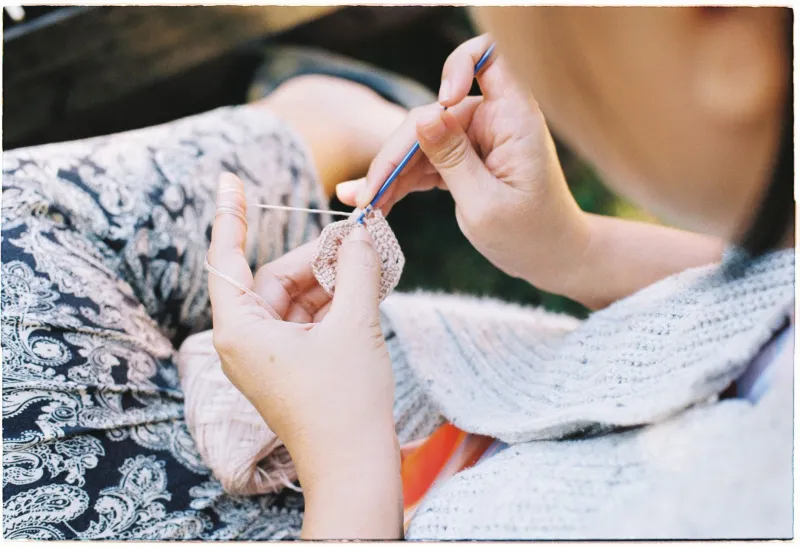
When Getting Better Starts to Feel Like Getting Worse
Here's something nobody really warns you about when you first pick up a crochet hook: there's a weird stretch in the middle of your craft journey where everything feels harder than it should. Not harder because you're bad at it — harder because you know just enough to know what you're doing wrong.
If you've been crocheting for a year or two and you're suddenly second-guessing your tension, ripping out rows you would've left in six months ago, or staring at a half-finished project with zero motivation to pick it back up, you're not alone. This is the intermediate slump, and it's one of the most common (and least talked-about) experiences in the crochet world.
Let's dig into why it happens and, more importantly, how to get unstuck.
The Beginner High Is Real — and It Doesn't Last Forever
When you're brand new to crochet, everything is a win. Your first chain stitch? Amazing. A completed dishcloth that's slightly uneven on one side? Frameable. That early stage of learning is flooded with what psychologists call "beginner's mind" — you're not burdened by high expectations, so every small success feels enormous.
Your brain is also getting a serious dopamine hit from learning new motor skills. Forming those neural pathways, figuring out how to hold the yarn, getting your tension somewhat consistent — all of that novelty lights up your reward system in a big way.
But here's where it gets complicated. Once the basics click, the novelty wears off. You're no longer a total beginner celebrating every stitch, but you're also not yet at the stage where complex patterns flow naturally. You're in the gap — and that gap can feel really discouraging.
Why Your Hundredth Project Can Feel Harder Than Your Third
This is the part that trips people up. You'd think that more experience equals more confidence, right? Not always. Here's what's actually happening:
You've raised your own standards. When you were new, a slightly wonky edge was just part of the charm. Now you see every imperfection clearly, and your hands know enough to know they should be doing better. That gap between what you can see and what you can currently execute is genuinely frustrating.
You've moved into unfamiliar territory. Beginner projects — dishcloths, scarves, simple hats — have a clear, comfortable structure. Intermediate patterns introduce things like working in the round, reading charts, managing multiple colors, or understanding garment construction. Each of those is basically a new skill set layered on top of the ones you already have. Of course it feels harder.
Your projects take longer and the stakes feel higher. A beginner dishcloth takes a weekend. An intermediate cardigan takes weeks. The longer a project takes, the more emotionally invested you become — and the more it stings when something goes wrong.
The community pressure doesn't help. Scroll through Instagram or TikTok for five minutes and you'll see jaw-dropping finished objects from makers who've been at this for decades. It's easy to forget that what you're seeing is a highlight reel, not a full picture.
Signs You're in the Intermediate Slump
Not sure if this is you? Here are a few telltale signs:
- You start projects with enthusiasm and abandon them before finishing
- You keep gravitating back to patterns that are way below your current skill level
- You feel anxious rather than excited when you pick up a new pattern
- You've bought yarn for approximately 47 projects but finished maybe four
- You compare your work to more advanced makers and feel deflated instead of inspired
Any of that sound familiar? Yeah. Welcome to the club. It's a big one.
How to Break Through and Actually Enjoy Crocheting Again
Give Yourself Permission to Make Ugly Things
One of the fastest ways to get unstuck is to deliberately lower the stakes. Pick up some inexpensive acrylic yarn — nothing precious — and just make something without any intention of keeping it. Experiment with a stitch you've never tried. Make a swatch that goes absolutely nowhere. The point is to remind your hands and your brain that crochet is supposed to be fun, not a performance.
Finish Something Small
If you've got a graveyard of unfinished projects, resist the urge to tackle the biggest one first. Instead, find the smallest, closest-to-done item in your bag and finish it. Completion feels good. It breaks the cycle of starting-and-abandoning and reminds you that you are, in fact, capable of seeing things through.
Learn One Specific New Skill (Not a Whole New Category)
Instead of diving into an ambitious new project that requires ten skills you haven't mastered, isolate one technique and work on just that. Want to understand colorwork? Spend a week only doing that. Struggling with reading charts? Find a beginner chart tutorial and do nothing else until it clicks. Targeted practice builds confidence in a way that muddling through a complex pattern just doesn't.
Find Your People
Crochet can be a solitary hobby, which is part of its appeal — but isolation doesn't help when you're feeling stuck. Look for a local yarn shop that hosts stitch-and-chat nights, or find an online community (Ravelry, Reddit's r/crochet, and countless Facebook groups are great starting points). Being around other makers at different skill levels normalizes the struggle and gives you a built-in support system.
Revisit Why You Started
Go back to your very first finished project — or if you don't have it anymore, think about what made you pick up a hook in the first place. Maybe it was the meditative rhythm of repetitive stitches. Maybe it was the idea of making gifts for people you love. Maybe you just wanted something to do with your hands while watching TV. Whatever that original pull was, reconnect with it. The intermediate slump often happens when we lose sight of the "why" and get too focused on the "how well."
The Plateau Is Part of the Process
Every skilled crocheter you admire has been exactly where you are right now. The makers whose finished objects make your jaw drop? They had a phase where they seriously considered selling all their yarn and taking up a different hobby entirely. The plateau isn't a sign that you're not cut out for this. It's a sign that you've grown enough to recognize your own limitations — and that's actually a pretty sophisticated place to be.
The confidence will come back. It always does. But it usually needs a little coaxing, a little patience, and a whole lot of grace toward yourself.
So if your hook has been sitting untouched for a few weeks, maybe today's the day you pick it back up — not to make something perfect, but just to make something. Stitch by stitch, that's how it always comes back together.